ILLUSTRATED TALKS

Joyce Gold on the Queen Mary 2
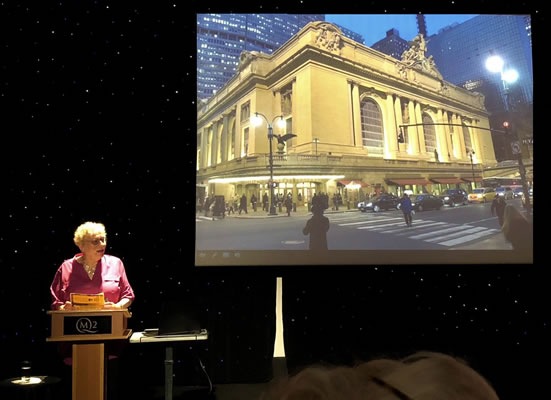
Guest speaker Joyce Gold on the ship, Queen Mary 2
photo courtesy of Bill Lokey

Schedule one of Joyce Gold's delightful illustrated talks, crammed with anecdotes and dozens of images that provide virtual tours of past and present New Yorkers, special places and defining ideas.

These illustrated talks are attractive as spousal activities for corporate meetings, introductions to NYC for newcomers, special events for organizations, orientation programs for colleges, or part of a training curriculum for hospitality personnel.

Talks can be customized to address the special interests of the group. Depending on the venue and the number of people attending, Joyce welcomes questions throughout the talk, and always holds a lively Q&A session at the end.

Contact Joyce for more information or to schedule a talk for your organization.
 

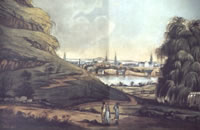
Collect Pond

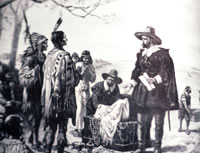
WHEN MANHATTAN WAS DUTCH

This talk features New York City's earliest years, the company that put down the first roots, the people who came and lived here, and the natives already here when the settlers arrived. The Dutch settlement lasted just 40 years, from 1624 to 1664. Yet these commercial origins have had an enduring influence as the city became one of the greatest business centers in the world.
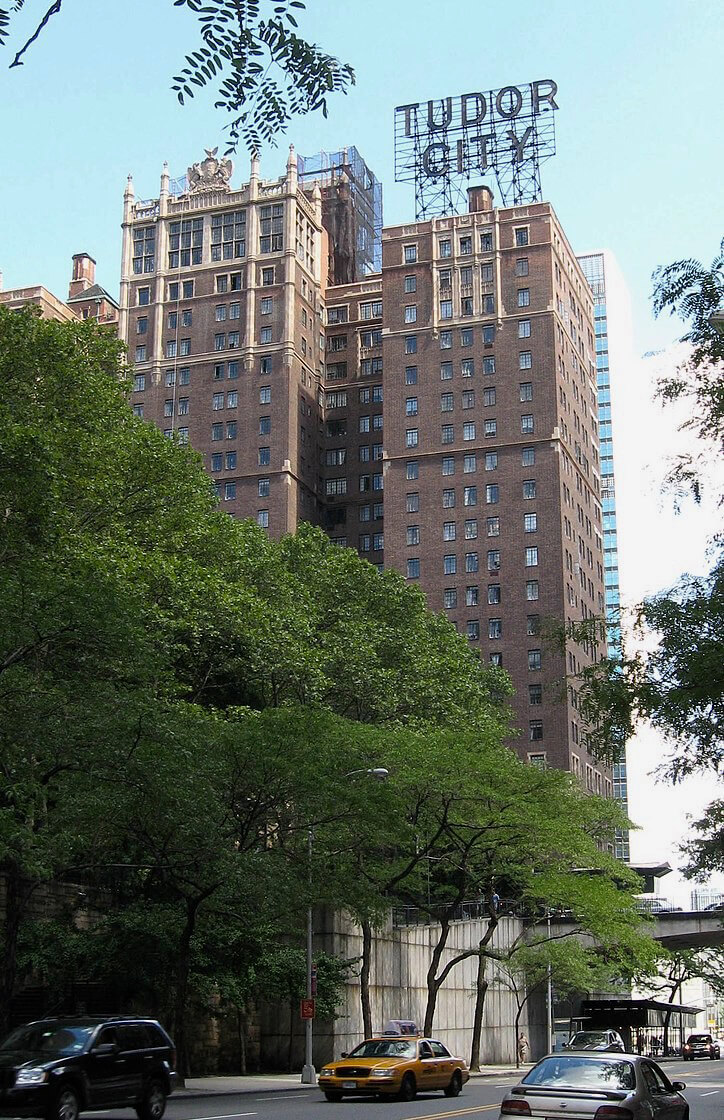
Tudor City building sign in NYC

TUDOR CITY — A QUIET HAMLET IN A NOISY NEIGHBORHOOD

When the grid plan of 1811 was implemented, the hill between 1st and 2nd Avenues, at East 42nd St. was not leveled. East 42nd St had to tunnel through the hill to reach 1st Avenue. Today that elevated land gives Tudor City a remarkably quiet, verdant setting above noisy, congested Midtown.
 
Built in the 1920s as a middle class, walk-to-work development, Tudor City was probably the first skyscraper residential community in the USA. Most apartments were small and efficiently designed, but several buildings included some luxury penthouses at the top. Tudor-style architecture and lush parks create a surprisingly quiet suburban atmosphere to the landscape. Enhancing that calm aura, no thru traffic was allowed in the enclave. East 41st and East 43rd Sts. do not connect to First Avenue. Instead they were linked to form a U-shaped road that traversed the East 42nd St. tunnel, now a slender bridge. 

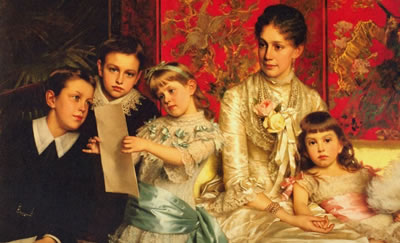
Mrs. Cornelia Ward Hall, by Michele Gordigiani (1835-1909)

THE GILDED AGE — GRANDIOSE YEARNINGS FROM UNTAXED EARNINGS

In the early years of the Gilded Age, Astor family were the pinnacle of “old money” with wealth dating back to the Dutch and British colonial times. Caroline Schermerhorn Astor’s ballroom could accommodate 400 people, thereby establishing the social register as a list of the 400 wealthiest people in New York. But “old money” was very soon challenged by people like Commodore Cornelius Vanderbilt, the epitome of "new money" which flowed from the industrialization beginning with the Civil War. By examining these two families, we can see the big themes and fabulous details of this age when the drive to accumulate great power and enormous wealth was matched by an equally fervent rivalry for prestige and a vaulted place in society. Fifth Avenue still has a concentration of formidable Gilded Age mansions. The moguls who built these city chateaux were vying to outdo one another & flaunting their wealth and worthiness for all to see. Women of the new-monied class competed with "old money" families for social standing with clothing, parties, and aristocratic connections. 

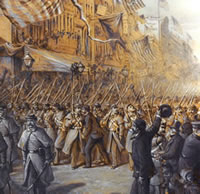
Union army NY

NEW YORK CITY AND THE AMERICAN CIVIL WAR

New York City gave the North a decisive advantage in the American Civil War. The city’s financiers provided the bonds and bondholders to cover the huge cost of waging war. Manufacturers produced uniforms, pharmaceuticals, munitions, and the world’s first iron-clad ship. But as the war dragged on, tensions between Irish and Blacks, and between the poor and the wealthy exploded into the violent Draft Riots.

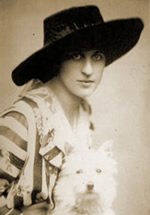
Inex Mulholland

THE IMMIGRANT, RADICAL, NOTORIOUS
WOMEN OF WASHINGTON SQUARE

Home to many of the political, creative, and intellectual movements in New York's history, Washington Square with its amazing female population accounts for much of that vitality.
 
Perhaps in no other six blocks on earth have so many notable women lived and achieved for the last 150 years. Throughout the years, it has seen an unparalleled variety of womenworking class, gentry, radical, literary, academic, theatrical, convict, and immigrant. Eleanor Roosevelt, Edith Wharton, Louisa May Alcott, Emily Roebling, Bella Abzug, Gertrude Vanderbilt Whitney, Ida Tarbell, Emily Post, Edna St Vincent Millay, and even the woman who invented the kewpie doll, all shared this famed New York neighborhood.

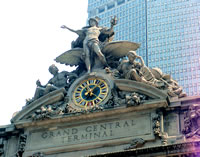
Grand Central Terminal

GRAND CENTRAL STATION— “CROSSROADS OF A MILLION PRIVATE LIVES!”

Grand Central accommodates 700,000 people a day in one of the most beautiful buildings in America. The building seems to embody the huge purpose of the terminal—to move great numbers of people, to provide services for travelers, to outshine its rival, and to create a real estate boom. This talk highlights the aesthetics, personalities and technology that created this masterpiece.

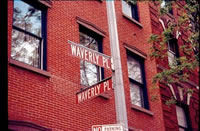
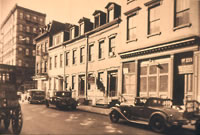
Waverly & Waverly, Greenwich Village

HISTORY IN ASPHALT — STREET PATTERNS OF GREENWICH VILLAGE

The streets of Greenwich Village can bring even seasoned New Yorkers to their knees. For them, and for anyone curious about how the meandering by-ways of Greenwich Village were carved into the island of Mannahatta, this talk is the essential primer. Streets bend, diagonals come out of nowhere, roads stop for no good reason, and thoroughfares change direction. Such intersections as Waverly Place & Waverly Place, and W 4th Street & W 10th Street do little to help.
 
There are good reasons behind the confusion, but it takes some digging to uncover them. Joyce Gold will explain how topography, natural boundaries, Indian paths, and estate ownership carved the first convoluted pattern of roads. And she will also show the strange result of the city’s insisting upon connecting areas north and south of the Village.

MacDougal St

  GREENWICH VILLAGE

The Village is one of New York's earliest landmarked communities. On quirky angled streets lie 1920s speakeasies, literary hang-outs, European-style coffeehouses, Off-Broadway theatres — the quintessential American Bohemia.

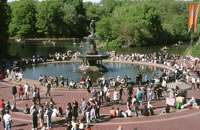
Bethesda Fountain, Central Park NY

CENTRAL PARK — THE BIG BACK YARD OF THE CITY

Fast-growing business-oriented New York City of the mid-19th century had largely ignored quality of life issues for its citizens. The winning design of Frederick Law Olmsted and Calvert Vaux transformed 843 acres into an educational, recreational, and horticultural marvel, the first great park in America, a masterpiece of urban landscape design.

Collect Pond, Central Park

NATURAL NEW YORK

NY's place in history owes a debt to the physical characteristics of the place now seen as a city of glass and concrete. What do the natural origins of Manhattan have to do with the city today?